
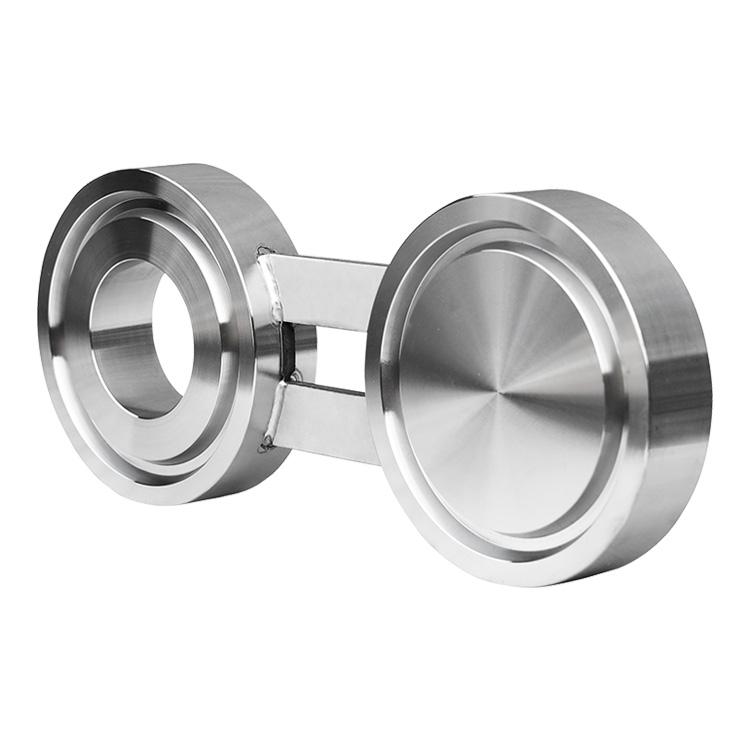
In modern industrial engineering, high precision non-standard flange manufacturing plays a critical role in supporting OEM systems that demand exact fit, stable performance, and long service life. Unlike standard flanges that follow fixed dimensions and common specifications, non-standard flanges are designed and produced according to custom drawings, special operating conditions, or unique machine interfaces. For OEM buyers, this means greater flexibility, improved system compatibility, and the ability to solve application-specific challenges with precision-engineered components.
A high precision non-standard flange manufacturer for OEM systems typically serves industries where standard parts are not enough. These include automation equipment, hydraulic systems, fluid control assemblies, aerospace subsystems, energy equipment, medical machinery, shipbuilding, chemical processing, and custom industrial machinery. In these environments, flange accuracy is directly related to sealing performance, pressure resistance, alignment, assembly efficiency, and overall equipment reliability.
This page provides a complete overview of non-standard flange manufacturing, including definitions, advantages, materials, dimensions, production methods, quality standards, and technical considerations. It is designed to support OEM purchasing, engineering research, product catalog pages, and SEO-focused industrial content strategies.
A non-standard flange is a flange that does not follow a fixed universal size or public standard in full. Instead, it is manufactured to meet custom requirements such as special outer diameter, bolt pattern, thickness, sealing surface, center bore, pressure rating, or connection geometry. While many flanges are produced according to standards such as ANSI, ASME, DIN, JIS, BS, or GB, non-standard flanges are created for cases where those dimensions cannot fully satisfy the application.
In OEM systems, non-standard flanges are often required when the design involves:
A high precision flange manufacturer must be able to convert drawings, samples, and technical requirements into repeatable production with strict dimensional control. This is especially important for OEM systems, where even minor deviation may affect sealing integrity or assembly performance.
High precision flange manufacturing is essential because OEM systems often rely on accurate component matching. A flange is not just a connector; it is a structural and sealing interface. If the machining tolerance is too loose, the flange may leak, vibrate, misalign, or fail under load. If the surface finish is poor, sealing performance may degrade. If the hole pattern is inaccurate, installation becomes difficult or impossible.
Precision affects several key performance factors:
For OEM brands, precision is not only a technical advantage but also a commercial one. It supports better product quality, fewer returns, lower maintenance cost, and stronger end-user confidence.
High precision non-standard flanges are used across many industries. Their custom nature makes them suitable for complex systems that require unique mounting, fluid transfer, or structural connection functions.
| Industry | Typical OEM Application | Why Non-Standard Flanges Are Needed |
|---|---|---|
| Hydraulics | Pump stations, manifolds, cylinder assemblies | Custom pressure interfaces and compact installation space |
| Pneumatics | Air handling units, actuator systems | Special bore sizes and bolt patterns |
| Automation Equipment | Precision motion systems, modular machinery | Exact alignment and custom connection geometry |
| Energy Industry | Power systems, renewable energy equipment | Pressure resistance and application-specific design |
| Chemical Processing | Corrosion-resistant piping and tanks | Special materials and sealing requirements |
| Marine and Shipbuilding | Fluid transfer and propulsion systems | Vibration resistance and anti-corrosion performance |
| Medical Equipment | Diagnostic systems, sterile process modules | Clean surfaces and precise fit |
| Aerospace | Fuel, air, and structural subsystems | Lightweight design and strict tolerance control |
Working with a high precision non-standard flange manufacturer provides OEM companies with important advantages in design flexibility, engineering support, and product performance. These benefits become especially valuable when standard catalog parts are not suitable.
Non-standard flange manufacturing allows OEM engineers to specify exact dimensions based on actual system needs. This may include special thickness, large diameter, unusual bolt layouts, unique sealing faces, or integrated mounting features.
Custom flanges ensure better compatibility with existing equipment, legacy systems, and special machine structures. This reduces the need for redesigning surrounding components.
High precision machining improves sealing face quality and dimensional accuracy. This is essential for pressure systems, liquid transfer, and high-vibration applications.
Custom components help OEM brands create specialized equipment with distinct technical characteristics. This can improve product positioning and market competitiveness.
Non-standard flange manufacturers often support prototype development, sample testing, and small-batch production. This is valuable for new product launches and specialized industrial projects.
OEM systems may need stainless steel, carbon steel, alloy steel, aluminum, brass, copper, or special corrosion-resistant materials. A custom manufacturer can match material to operating conditions.
Non-standard flanges can be classified by structure, function, sealing method, or application. The following are common types used in OEM engineering.
| Flange Type | Structure Description | Typical OEM Use |
|---|---|---|
| Custom Weld Neck Flange | Long tapered hub for stress distribution | High-pressure pipelines and heavy-duty systems |
| Custom Slip-On Flange | Pipe slips into flange before welding | General-purpose fluid systems and assemblies |
| Custom Blind Flange | Solid flange without center opening | End closure, testing, and maintenance access |
| Custom Threaded Flange | Internal threads for threaded connection | Low-weld applications and compact systems |
| Custom Socket Weld Flange | Pipe inserted into socket before welding | High-pressure small-bore systems |
| Custom Plate Flange | Flat flange cut from plate material | Equipment mounting and non-critical connections |
| Custom Lapped Joint Flange | Used with stub end for easy alignment | Frequent disassembly or maintenance systems |
| Custom Loose Flange | Free-rotating flange design | Assembly convenience and alignment improvement |
Material selection is a critical part of non-standard flange manufacturing for OEM systems. The correct material influences strength, corrosion resistance, machinability, weight, temperature resistance, and cost.
| Material | Main Advantages | Typical Applications |
|---|---|---|
| Carbon Steel | High strength, cost-effective, good machinability | General industrial systems, structural connections |
| Stainless Steel 304 | Corrosion resistance, versatile performance | Food processing, water systems, general OEM equipment |
| Stainless Steel 316 | Improved corrosion resistance in harsh environments | Chemical processing, marine equipment, medical devices |
| Alloy Steel | Enhanced mechanical strength and pressure resistance | High-load and high-pressure OEM systems |
| Aluminum | Lightweight, good machinability, corrosion-resistant | Automation, aerospace, precision machines |
| Brass | Good machinability, corrosion resistance, conductivity | Instrumentation, fluid control, specialized fittings |
| Copper | Excellent conductivity and thermal performance | Heat transfer systems, electrical and thermal applications |
| Duplex Stainless Steel | High strength and strong corrosion resistance | Offshore, chemical, and aggressive media environments |
The best material depends on operating pressure, temperature, media type, corrosion exposure, and budget. A reliable OEM flange supplier should help evaluate these factors during the design stage.
High precision non-standard flange manufacturers usually rely on advanced machining and inspection systems to meet strict OEM requirements. Common production methods include:
CNC machining is especially important for custom flange production because it provides repeatable precision and consistent geometry. For OEM systems, consistency is often as important as the initial sample quality.
Tolerance is one of the most important specifications in high precision flange manufacturing. Although exact requirements vary by design, the following table provides a general reference for OEM buyers and engineers.
| Specification Item | Common Precision Range | Importance in OEM Systems |
|---|---|---|
| Outer Diameter | ±0.05 mm to ±0.20 mm | Ensures alignment and fit with mating parts |
| Inner Bore | ±0.02 mm to ±0.10 mm | Critical for pipe or shaft matching |
| Bolt Hole Position | ±0.05 mm to ±0.15 mm | Supports easy installation and bolt alignment |
| Thickness | ±0.05 mm to ±0.20 mm | Affects strength and pressure performance |
| Flatness | 0.02 mm to 0.10 mm | Important for sealing reliability |
| Surface Roughness | Ra 0.8 to Ra 3.2 | Influences leakage control and contact quality |
These values are general reference ranges only. Actual precision depends on application demands, material properties, drawing specifications, and machining capability.
When requesting a non-standard flange, OEM buyers should define technical specifications as clearly as possible. This reduces communication errors and improves production accuracy.
| Specification Category | Details to Confirm | Why It Matters |
|---|---|---|
| Dimensions | Outer diameter, inner diameter, thickness, bolt circle, hole count | Ensures physical compatibility |
| Material | Metal grade, hardness, corrosion resistance requirements | Affects strength and service life |
| Pressure Rating | Working pressure, peak pressure, safety margin | Critical for system safety |
| Temperature Range | Minimum and maximum operating temperature | Ensures stable performance under heat or cold |
| Sealing Type | Flat face, raised face, ring-type, custom seal interface | Controls leakage prevention |
| Surface Finish | Machining finish, polished finish, coated finish | Influences sealing and corrosion resistance |
| Quantity | Prototype, sample, low volume, mass production | Determines manufacturing method and cost |
| Drawing Standard | 2D drawing, 3D model, sample-based production | Improves engineering accuracy |
Quality control is a core requirement for any high precision non-standard flange manufacturer. OEM systems depend on repeatability, so every batch must match the approved drawing and technical standard.
Common quality control steps include:
Advanced manufacturers may use coordinate measuring machines, digital calipers, micrometers, gauging systems, and optical inspection tools. For critical OEM applications, traceable inspection reports can help support compliance, documentation, and long-term supply chain reliability.
OEM product development often involves many design iterations. Non-standard flanges support this process by allowing engineers to test custom interfaces before moving to large-scale production. This flexibility makes them valuable in prototyping, validation, and customized equipment manufacturing.
Key OEM development benefits include:
In many OEM projects, a custom flange is a small part with a large role. It can determine how easily a machine is assembled, how well it seals, and how reliable it remains over time.
Surface treatment enhances the durability and appearance of custom flanges. Depending on the application, different finishing methods may be used to improve performance or extend service life.
| Surface Treatment | Main Benefit | Common Use |
|---|---|---|
| Polishing | Improves sealing surface quality | High-cleanliness and precision sealing systems |
| Galvanizing | Improves corrosion resistance | Outdoor and moisture-exposed equipment |
| Anodizing | Protects aluminum surfaces | Lightweight OEM assemblies |
| Black Oxide | Provides moderate protection and appearance | General industrial applications |
| Passivation | Enhances stainless steel corrosion resistance | Food, medical, and chemical systems |
| Coating or Painting | Adds color and environmental protection | Equipment visibility and structural protection |
Choosing the right high precision non-standard flange manufacturer for OEM systems requires careful evaluation of technical capability, production experience, and quality management. Since custom flange projects often involve exact specifications, the manufacturer must be able to understand drawings and produce consistent results.
Important selection criteria include:
It is also helpful to choose a manufacturer that can work from CAD files, technical drawings, or physical samples. This improves development efficiency and reduces technical risk.
The cost of custom flange manufacturing depends on several technical and production-related factors. Understanding these factors helps OEM buyers plan budgets more accurately.
| Cost Factor | Impact on Price | Explanation |
|---|---|---|
| Material Type | High | Special alloys and stainless steels usually cost more than carbon steel |
| Machining Complexity | High | More complex geometry requires more processing time |
| Precision Level | High | Tighter tolerances need better equipment and more inspection |
| Order Quantity | Medium to High | Small batches generally have higher unit cost |
| Surface Treatment | Medium | Additional finishing steps increase production cost |
| Testing Requirements | Medium | Pressure testing, hardness testing, and reports add value and cost |
| Lead Time | Medium | Rush orders may require special scheduling |
For OEM sourcing, the lowest price is not always the best choice. Cost should be balanced with precision, durability, documentation, and delivery reliability.
To achieve a successful OEM custom flange project, design preparation is extremely important. The more complete the technical information, the smoother the manufacturing process.
Recommended design guidelines:
Well-prepared drawings reduce the risk of misinterpretation and help the manufacturer produce a flange that matches the OEM system exactly.
As industrial systems become more specialized, the demand for custom flange solutions continues to grow. Standard components can handle many routine applications, but they cannot solve every engineering challenge. Non-standard flanges allow manufacturers to build smaller, stronger, more efficient, and more application-specific equipment.
This trend is especially visible in industries that demand high reliability, compact design, and custom performance. OEM manufacturers need components that fit existing machine architecture without compromising safety or efficiency. That is why high precision non-standard flange manufacturing has become a key capability in many supply chains.
The role of the flange is often underestimated, but in practice it is one of the most important connection parts in a system. A well-made custom flange can improve product quality, reduce maintenance issues, and support long-term operational success.
Standard flanges follow fixed industry dimensions and specifications, while non-standard flanges are custom-made according to unique drawings or special application needs.
OEM systems often require special fit, space-saving design, unique pressure ratings, or customized interfaces that standard flanges cannot fully provide.
Carbon steel, stainless steel, alloy steel, aluminum, brass, and copper are commonly used depending on the application environment.
Yes. Many manufacturers support prototypes, samples, and low-volume OEM production.
Buyers should provide drawings, dimensions, material requirements, surface treatment, quantity, tolerance, sealing type, and operating conditions.
The following keyword themes are naturally related to this topic and may help support search visibility when used in a structured industrial content page:
These keywords should be integrated naturally into headings, body text, alt text, metadata, and supporting internal links. For best SEO results, avoid keyword stuffing and keep the content technically useful and readable.
A high precision non-standard flange manufacturer for OEM systems provides more than a simple metal part. It delivers custom engineering support, dimensional accuracy, material flexibility, and production consistency for demanding industrial applications. In OEM environments, where every component must work as part of a larger system, custom flanges help improve fit, sealing, durability, and overall performance.
Whether used in hydraulics, automation, chemical processing, marine equipment, or precision machinery, non-standard flanges are essential for solving connection challenges that standard parts cannot address. By understanding materials, tolerances, finishing options, and technical requirements, buyers and engineers can make better decisions and build stronger OEM systems.
For industrial websites, blog posts, catalog pages, and manufacturer landing pages, this topic offers strong SEO value because it combines high commercial intent, technical depth, and broad application relevance. With the right structure and keyword strategy, content about high precision non-standard flange manufacturing can attract qualified traffic and support long-term search engine visibility.


حقوق الطبع والنشر © 2022 شركة Zhejiang Songlin Flange Co., Ltd.
خريطة الموقعيستخدم هذا الموقع ملفات تعريف الارتباط لضمان حصولك على أفضل تجربة على موقعنا.

 English
 Español
 Pусский
 Français
 Deutsch
 日本語
日本語 한국어
한국어 Italiano
 Nederlands



 واتس اب
 هاتف
هاتف
تعليق
(0)