
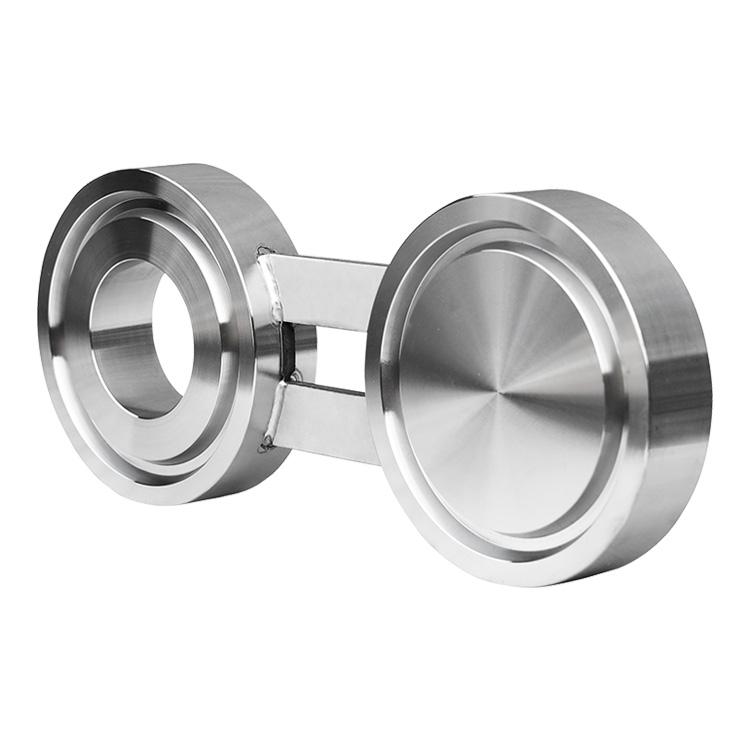
A heavy duty industrial flange for pipeline construction is one of the most important connection components in modern piping systems. It is widely used in oil and gas pipelines, water transmission networks, chemical processing lines, power plants, offshore installations, refineries, and industrial utility systems. Designed to create secure, pressure-resistant, and maintainable pipe connections, industrial flanges play a key role in pipeline integrity, installation efficiency, and long-term operational safety.
In pipeline construction, the selection of the right flange directly affects sealing performance, load-bearing capacity, resistance to vibration, corrosion protection, and overall system reliability. Heavy duty flanges are specifically engineered to withstand demanding service conditions such as high pressure, high temperature, mechanical stress, aggressive media, and outdoor exposure. Because of these advantages, they are a preferred choice in critical infrastructure projects where safety and durability are essential.
This guide provides a comprehensive overview of heavy duty industrial flanges for pipeline construction, including their definition, types, advantages, specifications, materials, standards, applications, installation considerations, and key selection factors. The content is designed for SEO-friendly use on blog pages, category pages, product directory pages, and industrial informational pages.
A heavy duty industrial flange is a mechanical pipe connection component used to join pipes, valves, pumps, fittings, and other equipment in a pipeline system. Unlike lightweight or general-purpose connectors, heavy duty flanges are manufactured to handle more demanding operating conditions and higher structural loads. They are typically used where the pipeline must remain stable under pressure, temperature changes, vibration, external impact, or corrosive environments.
In practical terms, a flange is a flat or raised rim that is attached to the end of a pipe section. Two flanges are joined together using bolts and a gasket, forming a tight sealed connection. This bolted assembly allows easy inspection, maintenance, replacement, and disassembly compared with permanent welded joints. For large-scale pipeline construction, this flexibility is a major advantage.
Heavy duty industrial flanges are manufactured in many sizes, pressure classes, facing types, and material grades. They are commonly produced according to recognized international standards to ensure compatibility, performance, and interchangeability across project requirements.
Pipeline construction requires components that can maintain sealing integrity while resisting stress over long periods. Heavy duty industrial flanges are important because they provide a reliable connection point between pipe sections and system equipment. They also make it easier to assemble and disassemble pipeline sections during fabrication, maintenance, upgrades, and inspection.
In large industrial projects, flanges are often preferred over other connection methods because they support:
Because of these characteristics, the heavy duty industrial flange for pipeline construction is a foundational element in both above-ground and buried pipeline systems.
Different flange types are used depending on pressure level, pipe size, installation method, and service environment. Choosing the proper type is essential for safe and efficient pipeline construction.
| Flange Type | Typical Use | Main Benefit |
|---|---|---|
| Weld Neck Flange | High-pressure and high-temperature pipelines | Excellent stress distribution and strong structural support |
| Slip-On Flange | General industrial piping | Easy installation and cost-effective fabrication |
| Blind Flange | Closing pipeline ends or future expansion points | Seals off pipe ends securely |
| Socket Weld Flange | Small-diameter high-pressure pipelines | Strong connection with compact design |
| Threaded Flange | Low to moderate pressure systems | No welding required |
| Lap Joint Flange | Systems requiring frequent dismantling | Easy alignment and maintenance access |
| Orifice Flange | Flow measurement applications | Supports differential pressure instrumentation |
| Long Weld Neck Flange | Severe service and high-load connections | Extra reinforcement and improved durability |
Among these, the weld neck flange is one of the most common choices for heavy duty pipeline construction because its tapered hub design reduces stress concentration and improves performance under challenging conditions.
Heavy duty industrial flanges offer several practical and operational benefits that make them suitable for pipeline construction in demanding sectors.
Heavy duty flanges are designed to handle significant mechanical loads, internal pressure, and external forces. This makes them suitable for high-demand pipeline environments where weaker connectors may fail.
When combined with the correct gasket and torque pattern, industrial flanges create a strong sealed joint that helps prevent leakage. Reliable sealing is critical for pipelines carrying water, steam, gas, oil, chemicals, or process fluids.
Unlike welded joints that are permanent, flange connections can be opened for inspection, cleaning, repair, or replacement. This is especially useful in industrial systems requiring regular shutdown maintenance.
Flanges are available in many standards, pressure ratings, and sizes, allowing them to connect with a wide range of pipes and equipment. This flexibility supports complex pipeline design.
Although heavy duty flanges may have a higher upfront cost than simpler connectors, they often reduce long-term maintenance expenses by improving reliability, repair access, and service life.
Heavy duty flanges can be manufactured with corrosion-resistant materials and protective coatings, making them suitable for outdoor exposure, marine environments, chemical plants, and high-temperature systems.
Material selection is one of the most important factors when specifying a heavy duty industrial flange for pipeline construction. The correct material affects strength, corrosion resistance, weldability, cost, and service life.
| Material | Common Properties | Typical Applications |
|---|---|---|
| Carbon Steel | Strong, durable, economical | General industrial pipelines, water systems, oil and gas transmission |
| Stainless Steel | Excellent corrosion resistance, good hygiene | Chemical processing, food systems, marine environments |
| Alloy Steel | High strength and heat resistance | High-temperature and high-pressure service |
| Duplex Stainless Steel | Superior strength and chloride resistance | Offshore pipelines, seawater systems, harsh chemical service |
| Nickel Alloys | Excellent resistance to aggressive media | Severe corrosion environments, chemical and petrochemical plants |
| Galvanized Steel | Improved surface protection | Outdoor utility pipelines and moderate corrosion exposure |
In many pipeline construction projects, carbon steel flanges are selected for structural strength and economic value. Stainless steel and duplex stainless steel are preferred where corrosion resistance is critical. The best material depends on pressure class, temperature range, fluid type, and environmental conditions.
Heavy duty industrial flanges are often manufactured according to internationally recognized standards. These standards help ensure dimensional accuracy, pressure compatibility, and connection reliability across different project requirements.
| Standard | Region / Use | Description |
|---|---|---|
| ASME B16.5 | North America and global industrial use | Covers pipe flanges and flange fittings for sizes and pressure classes |
| ASME B16.47 | Large-diameter flanges | Used for oversized pipeline and industrial applications |
| EN 1092-1 | Europe and international projects | European standard for circular flanges |
| DIN | Industrial piping systems | Widely used in legacy and international installations |
| JIS | Japanese industrial systems | Common in Asia-based industrial infrastructure |
| API standards | Oil, gas, and energy sectors | Used for pipeline and upstream/downstream applications |
The selected standard should match project engineering requirements, local regulations, and compatibility with other pipeline components. A properly standardized heavy duty flange supports consistent sizing, bolting, pressure rating, and face alignment.
Pressure class is a key specification for any heavy duty industrial flange. It indicates the flange’s ability to withstand pressure at a given temperature, although actual performance also depends on material, design, and application conditions.
| Pressure Class | General Usage | Notes |
|---|---|---|
| Class 150 | Low to moderate pressure systems | Common in utility and general industrial pipelines |
| Class 300 | Moderate pressure systems | Higher strength and thicker design than Class 150 |
| Class 600 | High-pressure industrial systems | Suitable for more demanding services |
| Class 900 | Severe service pipelines | Used where pressure and safety demands are elevated |
| Class 1500 | Very high-pressure systems | Requires careful engineering and material selection |
| Class 2500 | Extreme pressure applications | Used in specialized high-stress environments |
The correct pressure class depends on the pipeline’s operating pressure, temperature, media, and design codes. Higher class flanges usually offer thicker sections, stronger bolting requirements, and greater sealing capability.
The flange face plays a major role in sealing performance. Different facing types are used to match gasket style, pressure class, and operating conditions.
| Facing Type | Characteristics | Common Use |
|---|---|---|
| Flat Face (FF) | Entire face is flat | Low-pressure systems and cast iron connections |
| Raised Face (RF) | Raised sealing surface | Most common general industrial use |
| Ring Type Joint (RTJ) | Grooved face for metal ring gasket | High-pressure, high-temperature, and critical service |
| Male and Female | Matching interlocking surfaces | Improved alignment and sealing in selected systems |
| Tongue and Groove | Interlocking sealing design | Specialized applications requiring precise gasket positioning |
For many heavy duty industrial pipeline projects, the raised face is the most common and practical choice. For severe service, RTJ flanges are often preferred due to their stronger metal-to-metal sealing performance.
Heavy duty industrial flanges are used across a wide range of industries and project types. Their strength, versatility, and maintenance-friendly design make them essential in many pipeline construction environments.
Across these industries, the heavy duty industrial flange for pipeline construction is chosen not only for connection strength but also for ease of maintenance, safety, and long-term stability.
The following table summarizes common specification parameters used when evaluating heavy duty industrial flanges for pipeline construction. Actual specifications vary by standard, project design, and operating conditions.
| Specification Item | Typical Options / Range |
|---|---|
| Nominal Size | Commonly from small-diameter lines to large-diameter industrial pipes |
| Pressure Class | Class 150, 300, 600, 900, 1500, 2500 |
| Material | Carbon steel, stainless steel, alloy steel, duplex stainless steel, nickel alloys |
| Facing Type | Raised face, flat face, RTJ, male/female, tongue and groove |
| Connection Method | Weld neck, slip-on, threaded, socket weld, lap joint, blind |
| Surface Finish | Machined, coated, galvanized, anti-corrosion treated |
| Temperature Range | Depends on material and design code |
| Seal Type | Soft gasket or metal gasket depending on service requirements |
| Bolting | Standard bolts, studs, and nuts matched to pressure class |
| Inspection Testing | Dimensional inspection, visual inspection, pressure-related verification |
Selecting the correct flange for pipeline construction requires careful evaluation of system demands. The wrong choice can result in leakage, premature wear, installation problems, or unnecessary cost.
The first step is to define the expected pressure and temperature range. These values help determine the correct pressure class and material grade.
The pipeline contents may include water, steam, oil, gas, chemicals, slurry, or corrosive liquids. Media compatibility affects material selection and gasket choice.
Outdoor exposure, marine atmosphere, underground installation, and chemical exposure all influence flange performance. Corrosion resistance may be essential in harsh environments.
The flange must match the applicable standard, bolt pattern, face type, and dimensions used in the project. Standard compatibility ensures correct fit and performance.
If the pipeline requires frequent inspection or dismantling, a flange design that supports easy disassembly may be more practical than a permanent joint.
Pipe wall thickness, diameter, and schedule must be compatible with flange selection to achieve a safe and durable joint.
Proper installation is essential to ensure that a heavy duty industrial flange performs as intended. Even a high-quality flange can fail if it is installed incorrectly. Good installation practices help maintain leak-free service and extend component life.
In heavy duty pipeline construction, installation quality is just as important as material quality. A well-installed flange system improves sealing reliability, reduces maintenance interruptions, and supports safe long-term operation.
Routine inspection and maintenance are critical for flange performance in industrial pipelines. Flange connections should be checked periodically for signs of leakage, gasket degradation, corrosion, misalignment, or bolt loosening.
Common maintenance practices include:
Preventive maintenance reduces the risk of unplanned downtime and helps preserve the structural performance of heavy duty industrial flange systems.
Pipeline construction often uses different connection methods depending on the design requirement. Compared with welded joints, couplings, and threaded connections, flanges offer a unique combination of strength, versatility, and serviceability.
| Connection Method | Strength | Maintenance Access | Typical Use |
|---|---|---|---|
| Flanged Joint | High | Excellent | Industrial pipelines, equipment connections |
| Welded Joint | Very High | Poor | Permanent pipeline systems |
| Threaded Joint | Moderate | Good | Smaller systems and low-pressure lines |
| Coupling | Moderate | Good | Utility and repair applications |
The heavy duty industrial flange is particularly valuable when a project requires both structural reliability and the ability to dismantle the line for maintenance. This combination makes it a preferred solution in many critical pipelines.
For content optimization, the following related keyword topics naturally support the main term heavy duty industrial flange for pipeline construction and help reinforce topical relevance:
These phrases are commonly searched by engineers, buyers, contractors, project managers, and procurement teams looking for technical information about industrial flange systems.
A heavy duty industrial flange for pipeline construction is a critical component that supports safe, flexible, and long-lasting pipeline systems. Its role in connecting pipes, equipment, and process lines makes it indispensable across oil and gas, water treatment, chemical processing, power generation, marine, and industrial utility projects.
With multiple flange types, materials, pressure classes, and facing options available, project teams can select a flange solution that matches the exact demands of the application. The right heavy duty flange improves structural strength, sealing reliability, maintenance convenience, and overall system performance. For pipeline construction projects that require durability and dependable connection integrity, industrial flanges remain one of the most trusted solutions in the global piping industry.
Whether used in new pipeline installation, system expansion, equipment tie-in, or maintenance planning, heavy duty industrial flanges continue to serve as a core element in modern industrial infrastructure.
```


حقوق الطبع والنشر © 2022 شركة Zhejiang Songlin Flange Co., Ltd.
خريطة الموقعيستخدم هذا الموقع ملفات تعريف الارتباط لضمان حصولك على أفضل تجربة على موقعنا.

 English
 Español
 Pусский
 Français
 Deutsch
 日本語
日本語 한국어
한국어 Italiano
 Nederlands



 واتس اب
 هاتف
هاتف
تعليق
(0)