
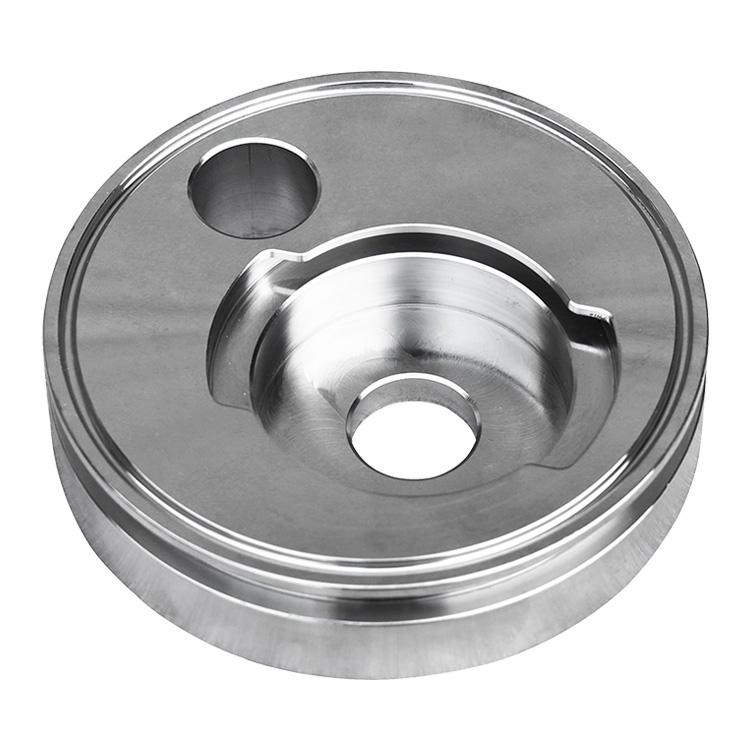
A custom slip-on flange for industrial equipment systems is a precision-engineered flange designed to slide over the outside diameter of a pipe, tube, or connected component before being welded in place. In industrial environments, this flange type is widely used because it offers a practical balance between installation efficiency, reliable sealing, mechanical strength, and cost control. When configured to meet specific project requirements, a custom slip-on flange becomes an adaptable connection solution for a wide range of process systems, utility lines, mechanical assemblies, and equipment interfaces.
In modern industrial equipment systems, flange selection plays a major role in performance, safety, maintainability, and lifecycle cost. A custom slip-on flange is often chosen when the application requires a tailored fit, specific dimensions, material compatibility, corrosion resistance, pressure tolerance, or special face preparation. Because industrial systems frequently operate under demanding conditions such as vibration, temperature fluctuation, chemical exposure, and high-pressure flow, the flange design must support both structural integrity and long-term service reliability.
This page provides a comprehensive overview of custom slip-on flange solutions for industrial equipment systems, including definition, working principle, common applications, key advantages, material options, dimensional standards, specification tables, design considerations, and selection factors. The following information is written in clear, SEO-friendly English and is suitable for use in blog content, category pages, product directory pages, and industrial knowledge pages.
A custom slip-on flange is a flange that is manufactured to project-specific requirements and designed to slide onto the end of a pipe or equipment nozzle before being fillet welded at both the inner and outer sides. Unlike standard off-the-shelf flanges that follow fixed dimensions and typical configurations, custom slip-on flanges can be adapted for unique industrial needs such as non-standard bore sizes, special material grades, modified thickness, drilling patterns, surface finishes, or face types.
The slip-on design is known for its simplicity and installation convenience. The flange bore is slightly larger than the pipe outside diameter, allowing the pipe to “slip on” easily. After alignment, the flange is welded to secure the connection. This makes the custom slip-on flange especially useful in industrial equipment systems where fabrication speed, alignment flexibility, and serviceability are important.
In practice, custom slip-on flanges are used in systems that transport water, oil, steam, air, gas, chemicals, slurry, and other industrial media. They are also common in mechanical equipment connections, pump skids, heat exchanger piping, compressor systems, process units, and utility networks.
The operating principle of a slip-on flange is straightforward. The flange is placed over the pipe or nozzle and aligned at the required position. Once positioned, it is welded to the piping or equipment connection. The bolt holes on the flange are then aligned with the mating flange, valve, fitting, or equipment interface, and a gasket is placed between the mating faces to form a sealed joint. Bolts are tightened in a controlled sequence to create compression on the gasket and ensure leak resistance.
In industrial equipment systems, this arrangement provides several functional benefits:
Custom engineering enhances this basic design by matching the flange to the exact application conditions. This may include special bolt patterns, non-standard flange thickness, raised face or flat face variations, corrosion-resistant alloys, or design adjustments for restricted spaces and equipment interfaces.
Industrial equipment systems are rarely uniform. Different projects may require different pipe sizes, pressure ratings, chemical resistance levels, or mounting conditions. A custom slip-on flange is valuable because it bridges the gap between standard components and unique site requirements. Instead of forcing a system design to fit a fixed flange specification, custom fabrication allows the flange to support the real operational needs of the project.
For industries that depend on reliable fluid transfer, process control, and mechanical stability, the right flange choice can influence uptime, maintenance frequency, leak prevention, and system safety. Custom slip-on flanges are especially helpful when the project involves:
Because of this flexibility, custom slip-on flanges are a widely adopted solution across process plants, utility systems, and mechanical equipment assemblies.
A custom slip-on flange for industrial equipment systems offers a wide range of performance and manufacturing advantages. The main benefits include the following:
| Advantage | Description | Industrial Value |
|---|---|---|
| Easy installation | Slides over the pipe before welding, making alignment simpler. | Reduces fabrication time and labor effort. |
| Custom dimensions | Can be made to non-standard sizes, thicknesses, and drilling patterns. | Supports specialized equipment and retrofit projects. |
| Versatile design | Compatible with many piping systems, media types, and pressure levels. | Useful across multiple industrial sectors. |
| Cost efficiency | Often less complex to manufacture and install than some alternative flange types. | Helps control project costs in large installations. |
| Good sealing performance | Works with suitable gaskets and proper bolt tightening. | Supports leak-resistant joints in demanding systems. |
| Space-friendly configuration | Useful where assembly space and accessibility are limited. | Fits compact mechanical layouts. |
When properly designed and installed, custom slip-on flanges can provide dependable service in many industrial equipment systems. Their popularity comes from the combination of affordability, adaptability, and practical performance.
Custom slip-on flanges are used in a wide range of industrial equipment systems. Their applications are not limited to one sector, because the design can be adapted for different operating environments and media types. Typical use cases include:
Because industrial equipment systems vary widely, the best flange solution depends on pressure class, media compatibility, installation method, maintenance access, and compliance with applicable standards.
The material selection for a custom slip-on flange is one of the most important design decisions. The right material helps determine mechanical strength, corrosion resistance, temperature tolerance, weldability, and cost. Industrial slip-on flanges are commonly produced from carbon steel, stainless steel, alloy steel, duplex stainless steel, and other specialty metals.
| Material Type | Typical Characteristics | Common Industrial Uses |
|---|---|---|
| Carbon steel | Strong, economical, widely used, good general-purpose performance. | Water systems, utility piping, general process equipment. |
| Stainless steel | Excellent corrosion resistance, clean appearance, suitable for demanding environments. | Chemical processing, food systems, marine exposure, hygienic applications. |
| Alloy steel | Improved strength and heat resistance for severe service conditions. | High-temperature piping, pressure systems, power equipment. |
| Duplex stainless steel | High strength and strong resistance to corrosion and chloride attack. | Offshore systems, chemical plants, corrosive fluid handling. |
| Nickel alloys | Exceptional resistance to heat, chemicals, and aggressive media. | Specialty process systems, extreme chemical environments. |
Material choice should always consider the working medium, operating temperature, pressure conditions, external environment, welding requirements, and maintenance cycle. For example, a carbon steel slip-on flange may work well for a general utility line, while a stainless steel or duplex flange may be necessary for corrosive process fluids or marine exposure.
One of the most important reasons for choosing a custom slip-on flange is dimensional flexibility. Standard flange dimensions are usually governed by recognized industrial norms, but custom fabrication allows modifications where necessary. A custom flange may vary in outside diameter, bore size, thickness, bolt circle diameter, number of bolt holes, hub length, face type, and finish.
| Dimension | Meaning | Why It Matters |
|---|---|---|
| Outside diameter | Total diameter of the flange body. | Must fit space constraints and mating geometry. |
| Bore size | Inner opening that fits over the pipe. | Ensures proper pipe fit and welding clearance. |
| Thickness | Overall flange body thickness. | Affects strength, stiffness, and pressure capability. |
| Bolt circle diameter | Diameter of the bolt hole circle. | Must align precisely with the mating flange. |
| Number of bolt holes | Total holes for bolting the joint. | Influences clamping force and standard compatibility. |
| Face type | Raised face, flat face, RTJ, or other face style. | Determines gasket compatibility and sealing method. |
Custom dimensional control is especially important in retrofit work, machine integration, and special equipment packages where the flange must interface with existing components. Even small dimensional deviations can affect bolting alignment, gasket compression, and sealing performance.
Custom slip-on flanges are commonly manufactured to support different pressure classes depending on the intended service. Pressure class selection must align with system design pressure, temperature, and safety factors. The following table gives a general overview of common flange class categories used in industrial systems.
| Pressure Class | General Use Level | Typical Application Context |
|---|---|---|
| 150 | Low to moderate pressure | Utility lines, water systems, general process piping. |
| 300 | Moderate pressure | Industrial process lines, pumps, equipment connections. |
| 600 | High pressure | Heavy-duty process systems, power and chemical applications. |
| 900 and above | Very high pressure | Specialized industrial systems and severe service environments. |
It is important to note that pressure capability is affected not only by the class rating, but also by material grade, temperature, gasket type, bolting, and installation quality. A flange rated for a certain class at ambient conditions may have different allowable working limits at elevated temperatures.
The flange face is critical for sealing performance. Different applications may require different face configurations depending on gasket type, pressure, and mating flange standards. Common face styles include:
| Face Type | Description | Typical Use |
|---|---|---|
| Raised face (RF) | Most common face type with an elevated sealing surface. | General industrial piping and process systems. |
| Flat face (FF) | Flat sealing surface without raised elevation. | Low-pressure systems and certain cast iron or special equipment connections. |
| Ring type joint (RTJ) | Grooved face designed for metal ring gaskets. | High-pressure, high-temperature, and critical sealing applications. |
| Special machined face | Custom face geometry made to project specifications. | Special equipment interfaces and proprietary assemblies. |
The correct face type must match the gasket design and the mating flange style. A mismatch can lead to leakage, uneven compression, or premature joint failure.
To better understand the value of a custom slip-on flange for industrial equipment systems, it helps to compare it with other common flange types. Each flange style has strengths and trade-offs, and the best choice depends on the project requirements.
| Flange Type | Main Feature | Strengths | Limitations |
|---|---|---|---|
| Slip-on flange | Slides over the pipe and is welded in place. | Easy alignment, cost-effective, flexible installation. | Not always preferred for severe cyclic loading or extreme conditions. |
| Weld neck flange | Has a long tapered hub welded to the pipe end. | Excellent stress distribution and high-pressure performance. | Typically more expensive and requires more precise fabrication. |
| Blind flange | Solid flange used to close pipe ends or openings. | Effective for isolation and system termination. | Not used for flow-through connections. |
| Threaded flange | Connects using internal threads instead of welding. | Useful where welding is not practical. | Less suitable for high vibration and some high-pressure services. |
| Sockolet or other fittings | Compact connection components for branch or special assemblies. | Useful in compact or specialized layouts. | Not a direct substitute for all flange applications. |
Among these options, the slip-on flange remains a strong choice when the project values ease of installation, moderate cost, and dependable general-purpose performance. A custom version expands those advantages by adapting the flange to the exact system conditions.
Engineering a custom slip-on flange for industrial equipment systems requires attention to several technical factors. The final design should be determined by a balance of structural, operational, and economic requirements.
When these factors are carefully considered, custom slip-on flanges can deliver reliable performance across a broad range of industrial equipment systems.
The production of a custom slip-on flange typically follows a sequence of engineering, material preparation, machining, drilling, and quality inspection steps. While exact processes vary by manufacturer and specification, the general workflow is similar across the industry.
| Step | Process Description | Purpose |
|---|---|---|
| 1. Material selection | Choose the base metal according to service requirements. | Ensures compatibility with pressure, temperature, and corrosion conditions. |
| 2. Cutting and forming | Prepare the raw forging, plate, or ring material. | Creates the approximate flange shape. |
| 3. Machining | Machine the bore, face, thickness, and outer profile. | Achieves the required dimensional accuracy. |
| 4. Drilling | Produce bolt holes on the correct bolt circle diameter. | Ensures proper fit with the mating flange. |
| 5. Face finishing | Apply raised face, flat face, or custom face machining. | Supports gasket sealing performance. |
| 6. Inspection | Check dimensions, surface quality, and material compliance. | Verifies that the flange meets project specifications. |
| 7. Marking and packaging | Apply product identification and prepare for shipment. | Improves traceability and handling efficiency. |
For industrial equipment systems, quality control is essential. A well-made custom flange should meet dimensional tolerances, material requirements, and surface quality expectations that align with the project standard.
Depending on the environment, a custom slip-on flange may receive surface treatment to improve corrosion resistance, longevity, or appearance. Common finishes and treatments include:
The selected finish should match the base material and the service environment. For example, outdoor industrial equipment may benefit from additional protective coating, while hygienic systems may require smooth stainless steel surfaces and controlled finish quality.
Even the best custom slip-on flange will not perform properly without suitable gasket selection and correct bolting. The gasket is the compressible sealing element placed between mating flange faces. Its role is to prevent leakage by filling surface irregularities and maintaining seal pressure.
Common gasket options used with slip-on flanges include:
Gasket choice depends on media compatibility, temperature, pressure, face type, and bolt loading. A custom slip-on flange intended for industrial equipment systems should be designed with gasket compatibility in mind from the beginning.
Quality assurance is critical in flange manufacturing because flange defects can cause leakage, downtime, and safety problems. Important inspection criteria for custom slip-on flanges include:
In industrial environments, inspection may also include non-destructive testing, hardness checks, chemical analysis, or other verification methods depending on the application and specification requirements.
Proper installation is essential to get the full performance benefit from a custom slip-on flange. Even if the flange is accurately manufactured, poor assembly can lead to leakage, misalignment, or premature wear.
For industrial equipment systems, installation quality should be treated as part of the overall flange performance strategy. A custom flange is only as effective as the joint assembly around it.
The following table shows a general specification framework that can be used when describing custom slip-on flanges in industrial content. Actual project values depend on the applicable standard and application requirements.
| Specification Item | Typical Options | Notes |
|---|---|---|
| Flange type | Slip-on | Designed to slide over pipe before welding. |
| Custom capability | Yes | Can be adapted for special dimensions or applications. |
| Material | Carbon steel, stainless steel, alloy steel, duplex, nickel alloy | Selected based on service environment. |
| Pressure class | 150, 300, 600, 900+ | Depends on design code and operating conditions. |
| Face type | RF, FF, RTJ, custom machined | Must match gasket and mating flange. |
| Size range | Small to large diameter options | Project-specific and code-dependent. |
| Finish | Machined, coated, galvanized, polished | Depends on environment and material. |
| Application | Industrial equipment systems, process piping, utilities | Widely used across industrial sectors. |
Choosing the right custom slip-on flange for industrial equipment systems involves more than matching pipe size. A good selection process should consider the following points:
The ideal solution is one that supports long-term reliability without unnecessary complexity. In many cases, custom slip-on flanges offer the right combination of practicality and performance for industrial systems that need standard functionality with non-standard details.
A custom slip-on flange for industrial equipment systems is a versatile, weld-on connection component used in process piping, utility lines, and mechanical assemblies. It provides easy installation, custom dimensional flexibility, dependable sealing, and broad material compatibility. Whether the project requires a carbon steel slip-on flange, stainless steel slip-on flange, or a specialty alloy version, the custom design approach helps ensure the flange fits the exact industrial operating environment.
In industrial equipment systems, a custom slip-on flange can support safe fluid transfer, reliable pressure containment, and maintainable connection design. Its adaptability makes it useful for equipment skids, pump systems, heat exchangers, chemical processing lines, water treatment systems, marine applications, and many other industrial installations. With correct material selection, face type matching, and specification control, a custom slip-on flange can deliver long service life and dependable system integration.
| Attribute | Importance | Consideration |
|---|---|---|
| Customization | High | Needed for special sizes, equipment interfaces, and retrofit projects. |
| Leak resistance | High | Depends on proper face, gasket, bolting, and welding. |
| Corrosion resistance | High | Material selection must match the operating environment. |
| Ease of installation | High | One of the main advantages of slip-on flange design. |
| Cost efficiency | Medium to high | Important for large industrial projects and equipment builds. |
| Maintenance support | High | Joint design should allow inspection and future disassembly when needed. |
The custom slip-on flange for industrial equipment systems remains one of the most practical and adaptable connection solutions in industrial engineering. Its ability to slide over a pipe, simplify alignment, and support custom specifications makes it an excellent fit for a wide variety of industrial applications. From process piping and utility systems to pumps, compressors, heat exchangers, and specialized equipment packages, the slip-on flange continues to provide value where reliability, flexibility, and cost control are important.
By selecting the correct material, pressure class, face type, surface finish, and dimensional configuration, industrial users can create a flange solution that matches exact operating requirements. For this reason, custom slip-on flanges are not just a standard component—they are a flexible engineering option that supports efficient design and dependable long-term performance in industrial equipment systems.


حقوق الطبع والنشر © 2022 شركة Zhejiang Songlin Flange Co., Ltd.
خريطة الموقعيستخدم هذا الموقع ملفات تعريف الارتباط لضمان حصولك على أفضل تجربة على موقعنا.

 English
 Español
 Pусский
 Français
 Deutsch
 日本語
日本語 한국어
한국어 Italiano
 Nederlands



 واتس اب
 هاتف
هاتف
تعليق
(0)